When Gemini 1.5 Pro dropped with a 1 million token context window in early 2024, developers started asking a question that's only gotten louder: do we still need RAG?
Long context models promise a simpler path. Instead of building complex retrieval pipelines, chunking documents, and tuning embedding models, you just dump everything into the prompt and let the model figure it out. Feed it 1,500 pages of text, an hour of video, or 30,000 lines of code. It handles the rest.
But simple doesn't always mean better. After two years of production deployments, the answer to whether you should use long context models or retrieval augmented generation explained is frustratingly nuanced: it depends on what you're building.
This guide breaks down when long context LLMs genuinely outperform RAG, when they fall short, and how to combine both for the best results.
What Makes a Long Context Model Different?
Early LLMs worked with tiny windows. GPT-3 could only process 2,048 tokens at once, roughly four pages of text. That forced developers to summarize, truncate, or build external retrieval systems just to answer questions about longer documents.
Today's context windows in language models have exploded. Gemini 2.5 Pro handles 2 million tokens. Claude 4 Sonnet recently jumped from 200K to 1 million. GPT-4.1 supports 1 million tokens. Open-source options like Qwen3 and Llama 4 Maverick offer 128K to 256K token windows.
To put those numbers in perspective: 1 million tokens equals roughly 750,000 words, 1,500 pages, 19 hours of audio, or the entire Harry Potter series plus room to spare.
The technical magic behind these extended windows comes from architectural improvements. Mixture of Experts (MoE) designs activate only a fraction of model parameters per token, reducing compute costs. Flash Attention and other memory optimizations make processing long sequences practical. And innovations like sliding window attention let models retain important context without the full quadratic compute penalty.
But raw capacity doesn't tell the whole story. Understanding tokenization and token counting matters because different content types consume tokens at wildly different rates. Images, PDFs, and code can eat through your window faster than plain text.
The Case for Long Context Over RAG
Research consistently shows long context models outperform RAG on certain benchmarks. A 2024 study found that long context LLMs beat retrieval approaches "in almost all settings" when resources weren't constrained.
Why? RAG introduces failure points. Your retriever might miss relevant chunks. Embeddings might not capture semantic nuance. The model receives fragments instead of complete context. Each step in the RAG implementation strategies guide pipeline represents a potential accuracy loss.
Long context sidesteps all of that. The model sees everything at once and decides what matters.
Specific scenarios where an extended context window wins:
Full document reasoning. When you need to understand how different sections of a contract relate to each other, or track character development across a novel, fragmented retrieval breaks the connections. Long context preserves them.
Code analysis. A 50,000 line codebase has implicit dependencies everywhere. Function A calls B, which references C, which inherits from D. Gemini long context capabilities let you feed the entire repo and ask questions that require understanding those relationships.
Multi-document synthesis. Comparing five research papers requires seeing all five simultaneously. RAG would struggle to retrieve the right passages from each paper to answer a cross-cutting question.
Meeting transcripts and conversations. A 3-hour meeting transcript contains context that builds progressively. References to "what Sarah said earlier" only make sense with the full conversation available.
In-context learning. Long context models can learn new tasks from examples provided in the prompt. Gemini 1.5 Pro demonstrated learning to translate Kalamang, a language with fewer than 200 speakers, from a single grammar manual provided as context.
Where Long Context Models Still Struggle
The marketing sounds great. The reality involves caveats that matter for production systems.
The "Lost in the Middle" Problem
Landmark research from Stanford showed that LLMs pay uneven attention across long inputs. Information at the beginning and end of prompts gets processed reliably. Details buried in the middle? Often ignored.
This isn't a solved problem. Even models claiming 99% accuracy on "needle in a haystack" tests struggle with real workloads. Those benchmarks measure single-fact retrieval. Real applications require synthesizing information scattered across thousands of tokens.
Chroma's research on what they call "context rot" found that even simple tasks like text replication degrade as input length grows. Models don't use their context uniformly, and performance becomes increasingly unpredictable with longer inputs.
Cost Explodes at Scale
Long context isn't cheap. Processing 1 million tokens through Gemini 2.5 Pro costs roughly $1.25 to $2.50 per request for input tokens alone. Add output tokens and you're looking at serious spend for high-volume applications.
Compare that to RAG, where you retrieve maybe 10K to 20K tokens per query. The cost difference can be 50x or more per request.
Latency Matters
Transformer attention has quadratic complexity. Double your input length, quadruple your processing time. A 1 million token prompt takes noticeably longer to process than a 10K token prompt with retrieved context.
For chatbots, customer support, or any real-time application, that latency kills user experience.
Scale Has Hard Limits
Even 2 million tokens caps out eventually. Enterprise knowledge bases contain billions of tokens. Customer support histories span decades. No context window handles everything, which means you need retrieval anyway for truly large-scale systems.
RAG vs Long Context: How to Choose
The RAG versus fine-tuning tradeoffs article covers one comparison. Here's how RAG stacks up against long context specifically.
Choose RAG when:
- Your data exceeds even the largest context windows
- Cost per query matters (high volume applications)
- Latency requirements are strict (sub-second responses)
- Your data updates frequently and you need current information
- You need exact source citations for compliance
Choose long context when:
- Complete documents must be analyzed holistically
- Accuracy trumps cost considerations
- You're working with fixed, bounded datasets
- Cross-document reasoning is critical
- You can't afford retrieval pipeline complexity
The Hybrid Approach
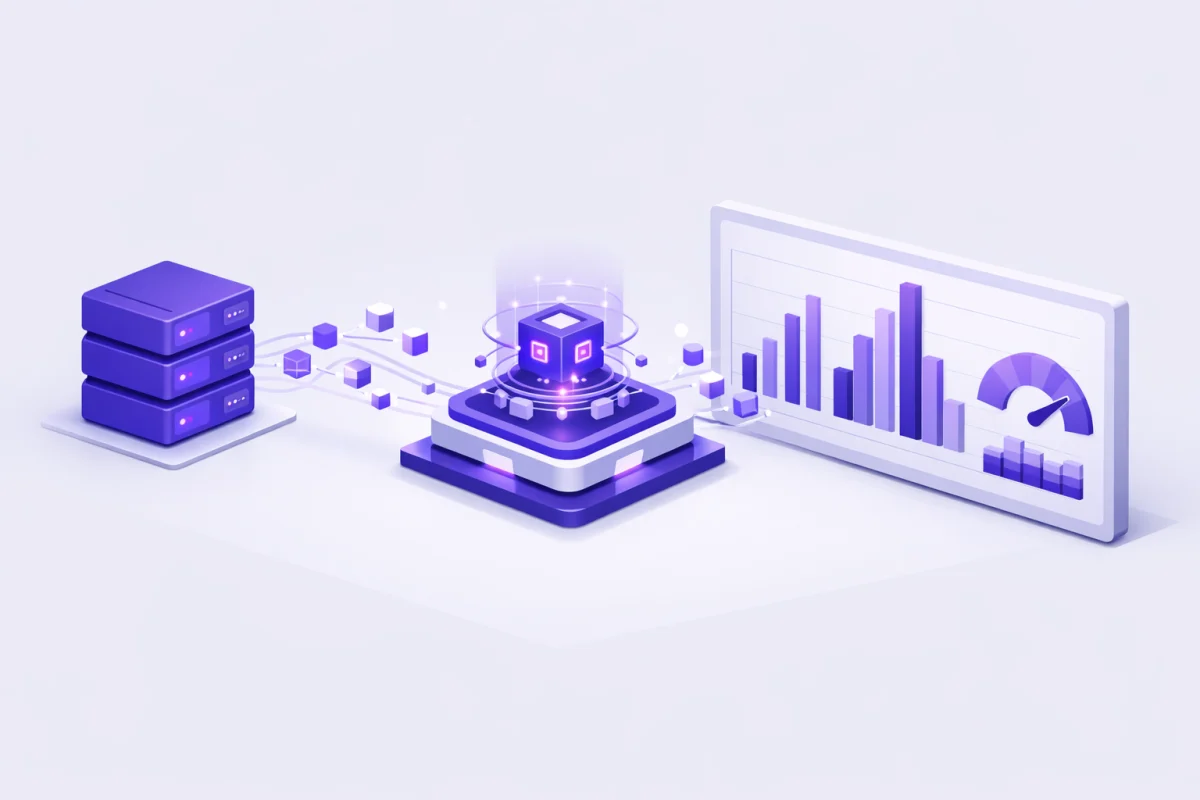
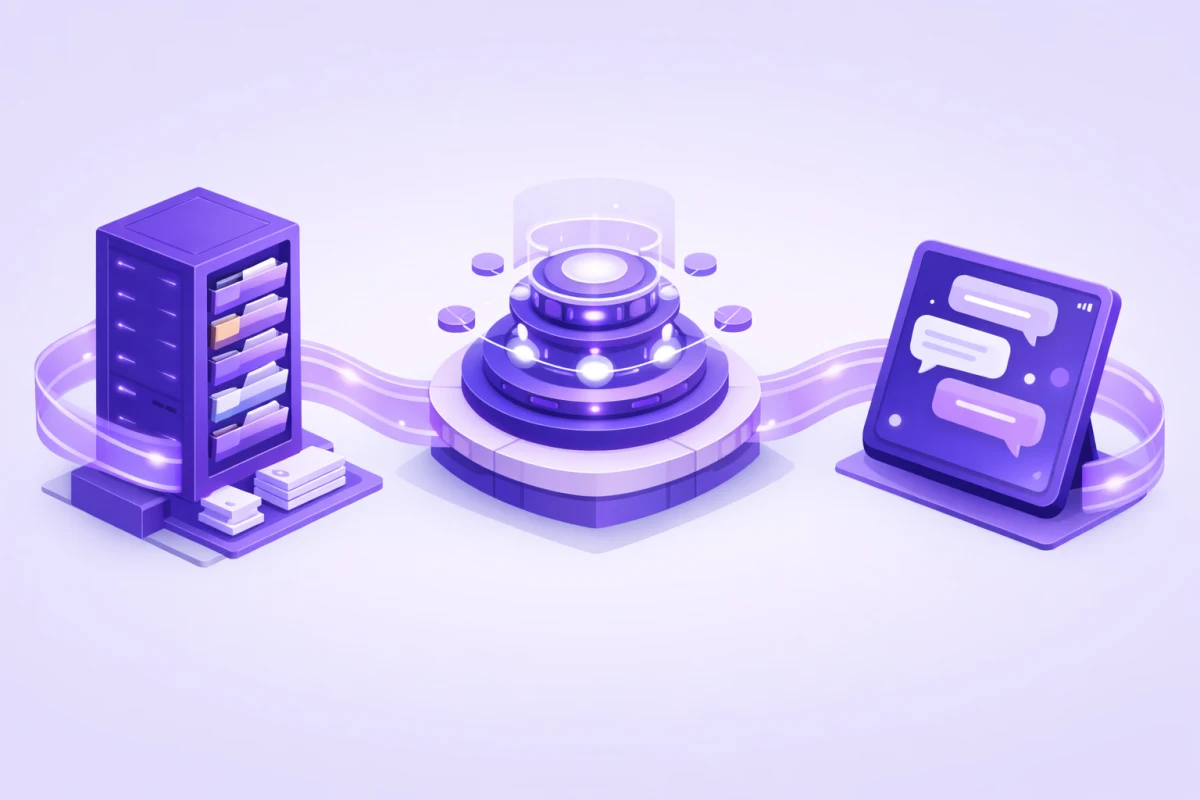
Most production teams now use both. The pattern looks like this:
- RAG retrieves the most relevant documents or chunks
- Long context models analyze the retrieved content deeply
- Reranking places the most important information at prompt boundaries (avoiding the "lost in the middle" issue)
This gives you RAG's scalability with long context's reasoning quality. You're not choosing between approaches. You're layering them strategically.
For maximizing context with stuffing techniques, the key is putting your most important retrieved content at the very beginning or end of the prompt, with secondary context in between.
Which Long Context Models Should You Consider?
The landscape moves fast, but here's where things stand.
Gemini 2.5 Pro and 3 Pro lead the pack with 1 million to 2 million token windows. Google pioneered mass-market long context and continues pushing boundaries. Gemini 3 Pro adds "Deep Think" mode for complex reasoning over extended inputs.
Claude 4 Sonnet recently expanded from 200K to 1 million tokens, putting it in the same league as Gemini for document processing. Claude's hybrid reasoning and strong coding capabilities make it popular for technical workflows.
GPT-4.1 supports 1 million tokens as well, though practical performance varies by use case. OpenAI's aggressive prompt caching can reduce costs significantly for repeated queries.
Open-source options include Qwen3 models (up to 262K native context), DeepSeek-R1 (164K), and Llama 4 Maverick (256K). These work well for self-hosting scenarios where you control the infrastructure.
For a broader view of available options, the AI model providers and capabilities landscape shows how different providers position their long context offerings. Understanding large language model fundamentals helps you evaluate which model architecture fits your needs.
Cutting Long Context Costs with Caching
Context caching transforms the economics of 1 million token workflows. Instead of paying full price to process the same documents repeatedly, you cache the processed state and pay reduced rates for subsequent queries.
All major providers now offer caching:
- Google charges roughly 75% less for cached input tokens
- Anthropic implements differential pricing for cache writes versus reads
- OpenAI applies caching automatically and transparently
The savings compound quickly. If you're analyzing the same contract against different questions, or querying the same codebase repeatedly, caching can cut costs by 90% after the initial cache is built.
Some teams use caching as a lightweight alternative to RAG for smaller document sets. Instead of building a vector database, they cache the entire knowledge base and query directly. This works well when your data fits comfortably in the context window and doesn't change frequently.
Practical Use Cases for Long Context
Legal document review. Analyzing 50-page contracts requires understanding how terms defined in section 3 affect obligations in section 47. Long context handles this naturally where chunked retrieval would miss the connections.
Code understanding. AI document summarization tools can summarize individual files, but understanding how a codebase works requires seeing the whole picture. Long context models can analyze entire repositories and answer questions about architecture, dependencies, and implementation patterns.
Research synthesis. Feeding multiple research papers into a single prompt enables comparing methodologies, identifying contradictions, and synthesizing findings across sources.
Customer conversation analysis. Week-long support threads tell a story. Long context captures the full narrative instead of isolated messages.
Video and audio analysis. Gemini can process 19 hours of audio or 1 hour of video in a single request, enabling transcription, summarization, and question-answering over multimedia content.
How to Get Started
If you're ready to explore what's possible, browse our ai platforms list to find tools that offer long context capabilities for your specific use case.
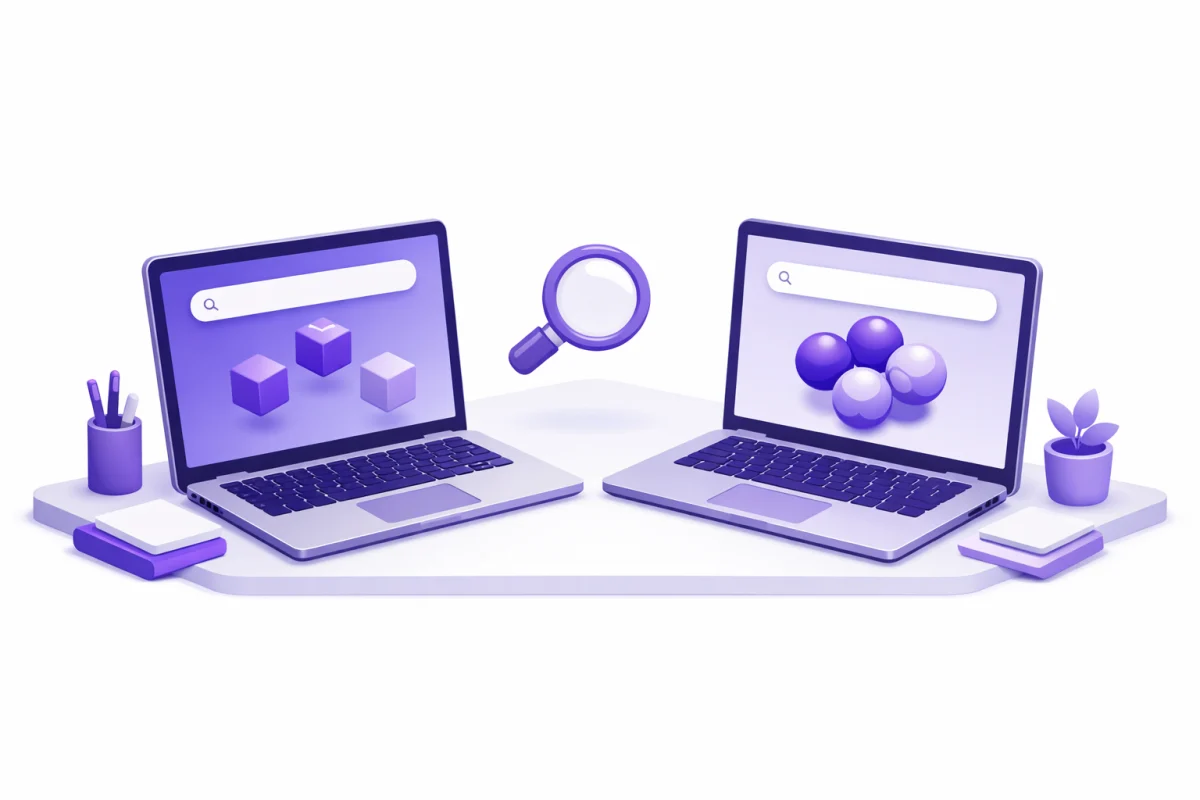
Start small. Test a long context model against your current RAG pipeline on the same queries. Measure accuracy, latency, and cost. You might find long context wins for certain query types while RAG wins for others.
Pay attention to where information sits in your prompts. Put critical context at the beginning. Use structured formatting with clear section headers. Tell the model explicitly which parts of the context are primary versus secondary.
Monitor for the failure patterns that plague long context: the model ignoring relevant information, hallucinating details that aren't in the context, or producing inconsistent answers to similar questions. These signal you're hitting the limits of what the context window can reliably process.
The Bottom Line
Long context models represent a genuine breakthrough. Processing 1 million tokens in a single prompt enables applications that simply weren't possible two years ago.
But they're not a magic replacement for RAG. Cost, latency, scale limits, and attention degradation all constrain real-world deployments. The "lost in the middle" problem means you can't treat long context windows as perfect memory.
Smart teams use both approaches. RAG scales to unlimited data and keeps costs manageable. Long context enables deep reasoning when accuracy matters more than speed. Combined intelligently, they deliver results neither approach achieves alone.
The question isn't whether long context will replace RAG. It's how to layer them for your specific use case.