Introduction
You've got an LLM project. The base model is smart, but it doesn't know your company's products, your industry's terminology, or last week's news. So how do you fix that?
The RAG vs fine-tuning debate comes down to a fundamental question: should you teach your model new information, or give it access to external knowledge at runtime? Both approaches help you customize LLM comparison, but they work in completely different ways.
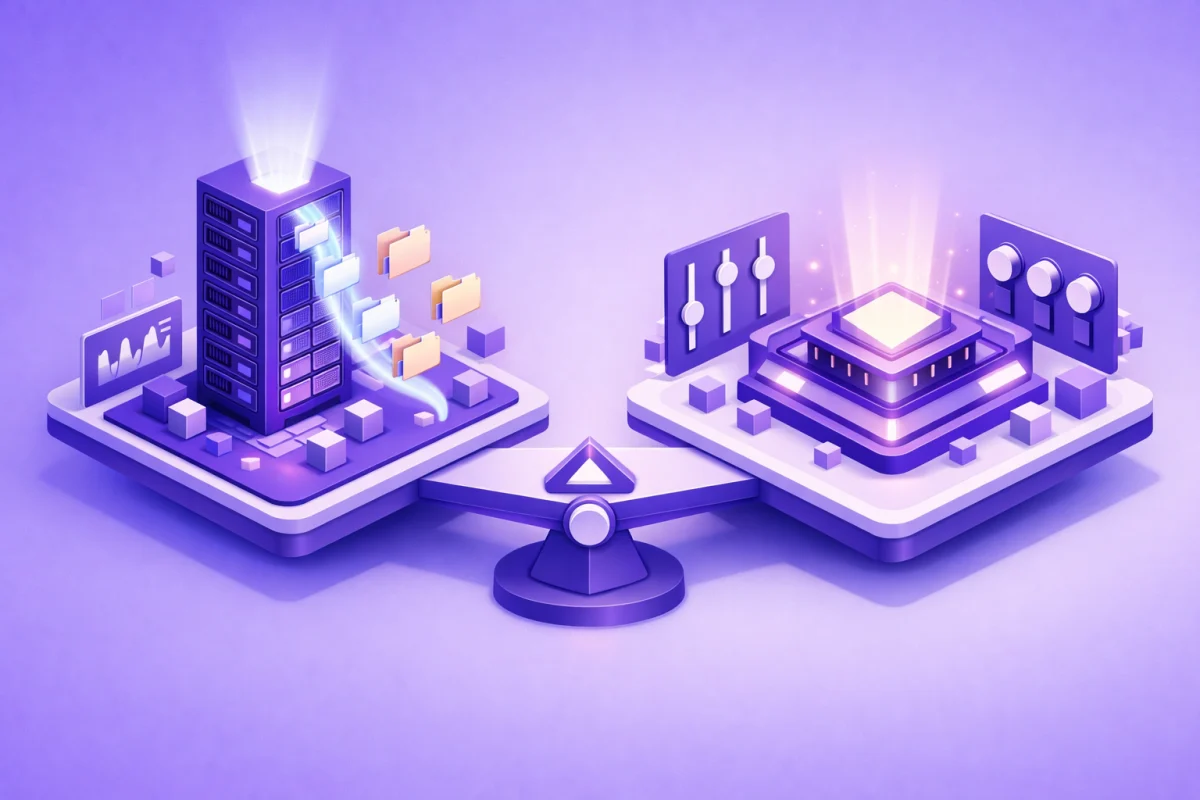
Here's the quick answer: RAG connects your model to external databases and retrieves relevant information when users ask questions. Fine-tuning retrains the model on your data so the knowledge becomes part of its parameters. Each approach has trade-offs in cost, flexibility, and performance.
This guide will help you understand when to use RAG, when fine-tuning vs retrieval makes more sense, and how to decide between rag or fine-tune for your specific situation.
What Is RAG and How Does It Work?
Retrieval-Augmented Generation, or RAG, is an architecture that connects LLMs to external knowledge sources. Instead of relying solely on what the model learned during training, RAG fetches relevant documents at the moment someone asks a question.
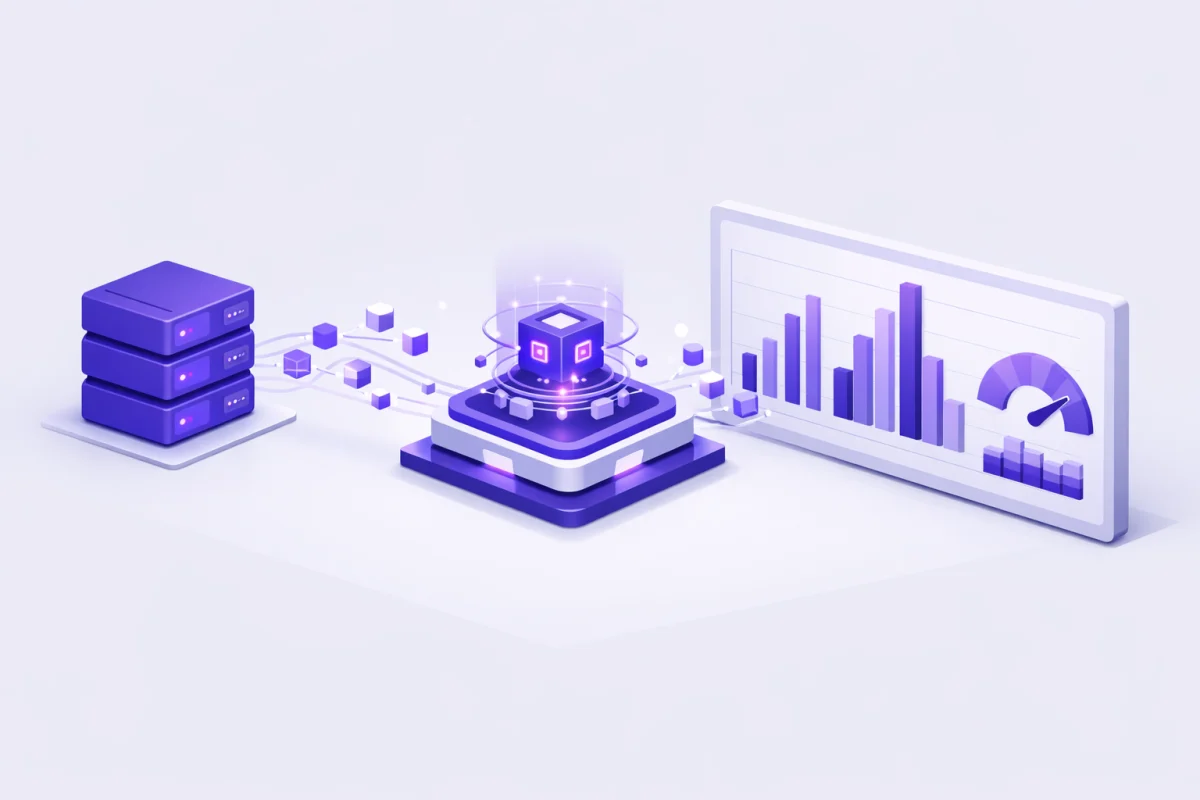
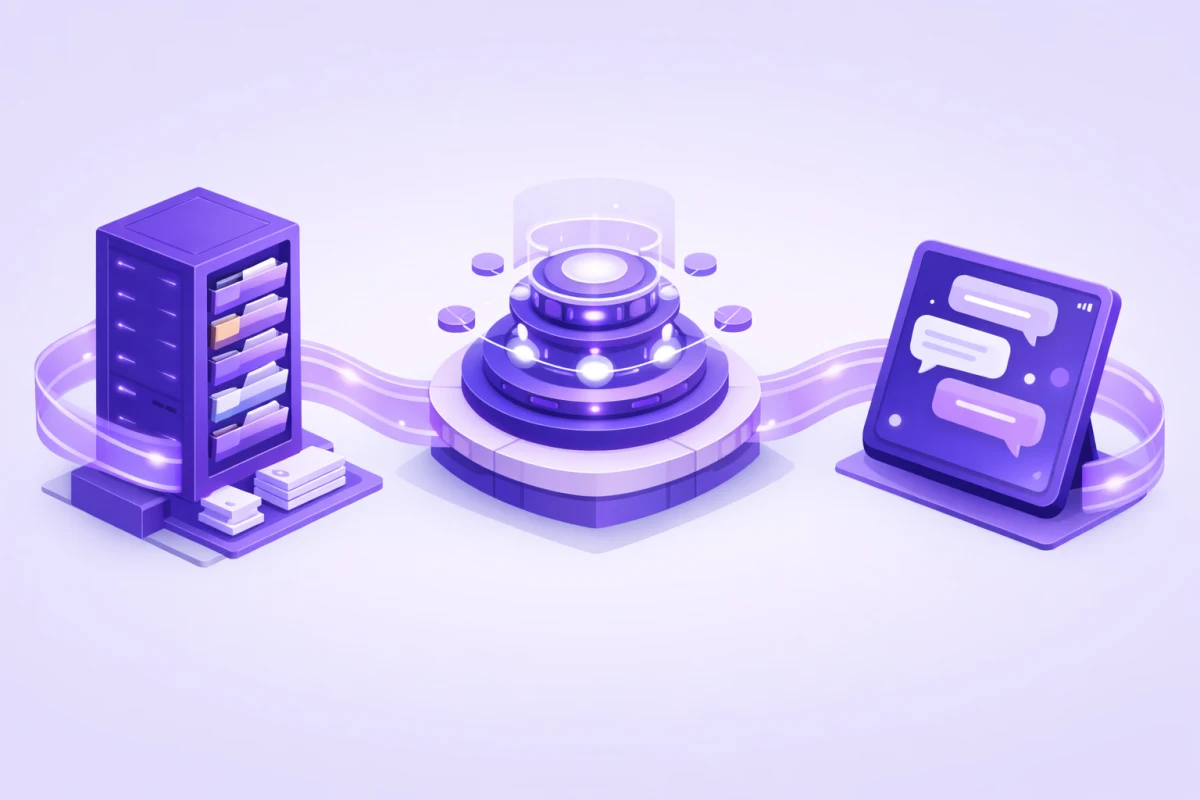
The process works in four steps. First, a user submits a query. Second, the system searches a knowledge base (often a vector database) to find relevant documents. Third, those documents get combined with the original question to create an enhanced prompt. Fourth, the LLM generates a response using both its trained knowledge and the retrieved context.
Meta AI researchers introduced this approach in 2020 to solve a fundamental problem: LLMs have frozen knowledge. Once training ends, they can't update their information or access new data. RAG changes that by giving models the ability to pull in fresh, relevant information whenever needed.
For a deeper dive into how this technology works, check out our guide on retrieval augmented generation basics.
What Is Fine-tuning and How Does It Work?
Fine-tuning takes a different approach. You're not giving the model access to external data. You're actually changing the model itself.
The process starts with a pre-trained LLM like Llama 3, Claude, or GPT-4. You then train it further on a smaller, domain-specific dataset. This adjusts the model's internal weights so it generates more accurate, relevant responses for your particular use case.
Think of it like this: a general-purpose LLM is a medical school graduate with broad knowledge. Fine-tuning turns that generalist into a specialist who deeply understands cardiology, or oncology, or whatever domain you need.
The model doesn't just memorize facts. It learns patterns, terminology, reasoning styles, and output formats specific to your domain. Our fine-tuning AI models explained guide covers the fundamentals in more detail.
Key Differences Between RAG and Fine-tuning
Understanding the core distinctions helps you make the right choice for your project.
Knowledge Source
RAG pulls information from external databases at query time. The model's knowledge stays as current as your database. Update the documents, and the model immediately reflects those changes.
Fine-tuning bakes knowledge into the model's parameters. The information is locked at training time. Want to add new data? You'll need to retrain.
Implementation Complexity
RAG requires building and maintaining a retrieval infrastructure. You need embedding models, vector databases, chunking strategies, and ranking systems. The RAG architecture and implementation process involves multiple components that must work together.
Fine-tuning requires less ongoing infrastructure but demands significant upfront effort. You need high-quality training data, GPU compute resources, and expertise in model training. Many teams now use efficient fine-tuning with LoRA to reduce resource requirements.
Cost Structure
RAG has lower upfront costs but ongoing expenses for database hosting, retrieval infrastructure, and API calls for each query. Fine-tuning requires significant initial compute investment but typically results in lower per-query costs once deployed.
For a 7B parameter model, fine-tuning might cost a few hundred dollars on cloud GPUs using LoRA techniques. A full fine-tune on a 70B model could run into thousands. RAG setup costs depend on your data volume but often start under $100/month for smaller deployments.
Transparency and Explainability
RAG naturally provides source citations. You can show users exactly which documents informed an answer, making it easier to verify accuracy and build trust.
Fine-tuned models are more opaque. The knowledge is embedded in billions of parameters with no easy way to trace which training examples influenced a specific response.
When to Use RAG
RAG shines in specific scenarios. Here's when this approach makes the most sense.
Your Data Changes Frequently
If your information updates daily, weekly, or even monthly, RAG handles this gracefully. Update your knowledge base, and the model immediately uses the new information. No retraining required.
Financial services firms use RAG to stay current with market data and regulatory changes. Healthcare organizations connect to medical literature databases that receive new research constantly. Customer support systems pull from product documentation that updates with each release.
You Need Real-time Information
RAG can connect to live data sources. Stock prices, inventory levels, shipping statuses, weather data. Anything that changes in real-time becomes accessible to your model.
Traditional fine-tuned models would be outdated the moment you deployed them for these use cases.
Transparency and Citations Matter
In regulated industries or high-stakes applications, being able to point to the source of information is critical. Legal research tools can show which case law supported an answer. Medical systems can cite specific studies.
This transparency also helps with debugging. When something goes wrong, you can trace back to the retrieval step and understand why the model generated a particular response.
You Have Limited Training Data
RAG works with whatever documents you have, even unstructured text. You don't need neat question-answer pairs formatted for training. Upload your PDFs, knowledge base articles, or documentation, and the system can start retrieving relevant passages.
Organizations without machine learning expertise or large labeled datasets often find RAG more accessible as a starting point.
Budget Constraints Exist
If you can't afford weeks of GPU compute time for training, RAG lets you build something functional quickly. Standing up a retrieval system over existing documents doesn't require the intensive compute that fine-tuning demands.
For teams looking to measure success, our guide on evaluating RAG system performance covers the metrics that matter.
When to Use Fine-tuning
Fine-tuning excels in different situations. Here's when adjusting the model itself makes more sense.
You Need Consistent Output Formats
If your application requires specific JSON structures, particular writing styles, or standardized response formats, fine-tuning delivers consistency that RAG can't match.
AI coding assistant tools often rely on fine-tuning to generate properly formatted code that follows specific conventions. Legal document generators need consistent clause structures. Medical transcription systems require standardized terminology.
Domain-Specific Reasoning Is Critical
Some tasks require more than just facts. They need domain-specific reasoning patterns that are hard to capture through retrieval alone.
Financial modeling requires understanding how different variables interact. Medical diagnosis involves complex differential reasoning. Legal analysis demands specific argumentative structures. Fine-tuning embeds these reasoning patterns into the model's behavior.
You Need Faster Inference
RAG adds latency. Every query requires a retrieval step before generation. For applications with strict response time requirements, this overhead matters.
Fine-tuned models generate responses directly without the retrieval bottleneck. If sub-100ms latency is a requirement, fine-tuning often provides the cleaner path.
Offline Deployment Required
Some applications need to run without internet connectivity. Field service applications, embedded systems, or high-security environments may not allow external API calls.
A fine-tuned model contains all its knowledge in its parameters. Deploy it locally, and it works independently.
Your Domain Is Stable
If your knowledge base changes yearly or less frequently, the overhead of RAG infrastructure may not be worth it. Fine-tune once, deploy, and revisit when significant updates occur.
Medical terminology, legal frameworks, and scientific fundamentals change slowly. A fine-tuned model on these stable domains can perform reliably for extended periods.
For implementation guidance, our complete fine-tuning training guide walks through the process step by step.
The Hybrid Approach: Combining RAG and Fine-tuning
Here's what the most sophisticated teams have discovered: you don't have to choose one or the other.
Hybrid approaches combine fine-tuning's deep domain expertise with RAG's dynamic information retrieval. The result often outperforms either approach alone.
A common pattern involves lightly fine-tuning a model for output consistency and domain tone, then layering RAG on top for factual grounding. The fine-tuned model understands your terminology and formatting requirements. RAG ensures it cites current, accurate information.
This approach is sometimes called RAFT (Retrieval-Augmented Fine-Tuning). UC Berkeley researchers demonstrated that training models to work effectively with retrieved documents, including learning to ignore irrelevant ones, significantly improves accuracy.
When Hybrid Makes Sense
Consider hybrid approaches when you need both specialized behavior and current information. A customer support system might fine-tune for brand voice and response structure while using RAG to pull from frequently updated product documentation.
Medical diagnostic tools might fine-tune for clinical reasoning patterns while retrieving the latest research and treatment guidelines.
Financial analysis systems can fine-tune for modeling expertise while RAG provides real-time market data and regulatory updates.
The Trade-offs
Hybrid architectures add complexity. You're maintaining both a fine-tuning pipeline and a retrieval infrastructure. Synchronization between the model's embedded knowledge and the external database requires attention.
The engineering overhead may not be worth it for simpler use cases. But for high-stakes applications where both accuracy and domain expertise matter, the combination delivers results neither approach achieves alone.
Decision Framework: RAG or Fine-tune?
Still unsure which path fits your project? Walk through these questions.
How often does your information change? Daily or weekly updates point toward RAG. Annual or less frequent changes make fine-tuning viable.
Do you need to cite sources? If transparency and auditability matter, RAG provides this naturally. Fine-tuned models are black boxes.
What's your latency requirement? Sub-100ms needs favor fine-tuning. If a few hundred milliseconds of retrieval time is acceptable, RAG works.
What are your compute resources? Limited GPU access or budget constraints make RAG more accessible. If you have compute resources and ML expertise, fine-tuning becomes practical.
Is offline deployment required? No internet connection means fine-tuning. RAG requires access to its knowledge base.
How specialized is your domain? Highly specialized reasoning patterns often need fine-tuning to embed properly. Information retrieval for facts works well with RAG.
For many organizations, the answer isn't binary. Start with RAG for quick deployment, then add fine-tuning once you've collected enough domain-specific training data and identified specific gaps.
Considering Long Context Models
Before choosing between RAG and fine-tuning, consider whether you even need either approach.
Modern LLMs support increasingly long context windows. Claude Opus 4.5 handles 200K tokens. Some models push beyond 1M tokens. If your entire knowledge base fits in context, you might simply include it in the prompt.
This approach sidesteps RAG's retrieval complexity and fine-tuning's training requirements. Just paste your documents and ask questions.
The limitations are real. Long context has token costs. Very long prompts increase latency. And models can still "lose" information buried in the middle of massive contexts.
But for moderate-sized knowledge bases, this option deserves consideration. Our guide on when long context models are better explores this alternative in depth.
Building Your Knowledge Base
Whichever approach you choose, data quality matters enormously.
For RAG, you need well-organized, accurate documents. Garbage in, garbage out applies directly. Outdated information in your knowledge base means outdated answers from your model.
For fine-tuning, training data quality is even more critical. Poorly formatted examples, inconsistent labeling, or factual errors get baked into the model's parameters. Fixing them requires retraining.
Many teams underestimate the data preparation work involved. Cleaning, formatting, and organizing your knowledge base often takes longer than implementing the actual RAG or fine-tuning pipeline.
Some organizations use synthetic data for model training to augment limited real-world examples, particularly for fine-tuning scenarios where high-quality labeled data is scarce.
Real-World Implementation Considerations
Theory is one thing. Here's what matters in practice.
RAG Implementation Challenges
Chunking strategy significantly impacts retrieval quality. Chunk too small, and you lose context. Chunk too large, and irrelevant information dilutes your prompts.
Embedding model selection matters. Different models perform better on different content types. Technical documentation might need different embeddings than conversational content.
Re-ranking retrieved results improves accuracy. The first results from vector search aren't always the most relevant. Adding a re-ranking step helps surface better content.
Fine-tuning Implementation Challenges
Data collection is typically the bottleneck. You need enough high-quality examples to move the needle without overfitting.
Evaluation is tricky. How do you measure whether your fine-tuned model is actually better? Building robust evaluation pipelines before training helps you understand what's working.
Catastrophic forgetting is real. Fine-tune too aggressively, and your model loses general capabilities it had before. Parameter-efficient techniques like LoRA help mitigate this.
Making Your Decision
Ready to find the right AI tools for your project? Browse our ai tools directory to explore options that fit your workflow, whether you're building RAG systems, fine-tuning models, or combining both approaches.
The RAG vs fine-tuning decision isn't about finding the "better" technique. It's about matching the right approach to your specific constraints and requirements.
Start with these considerations: How dynamic is your data? What's your budget? Do you need transparency? How specialized is your domain? What are your latency requirements?
For most teams starting out, RAG offers a faster path to something functional. You can stand up a system over existing documents without extensive ML expertise.
As your needs evolve, fine-tuning becomes an option for embedding deeper domain knowledge. And for the most demanding applications, hybrid approaches combine the strengths of both.
The best choice is the one that solves your actual problem with the resources you actually have.