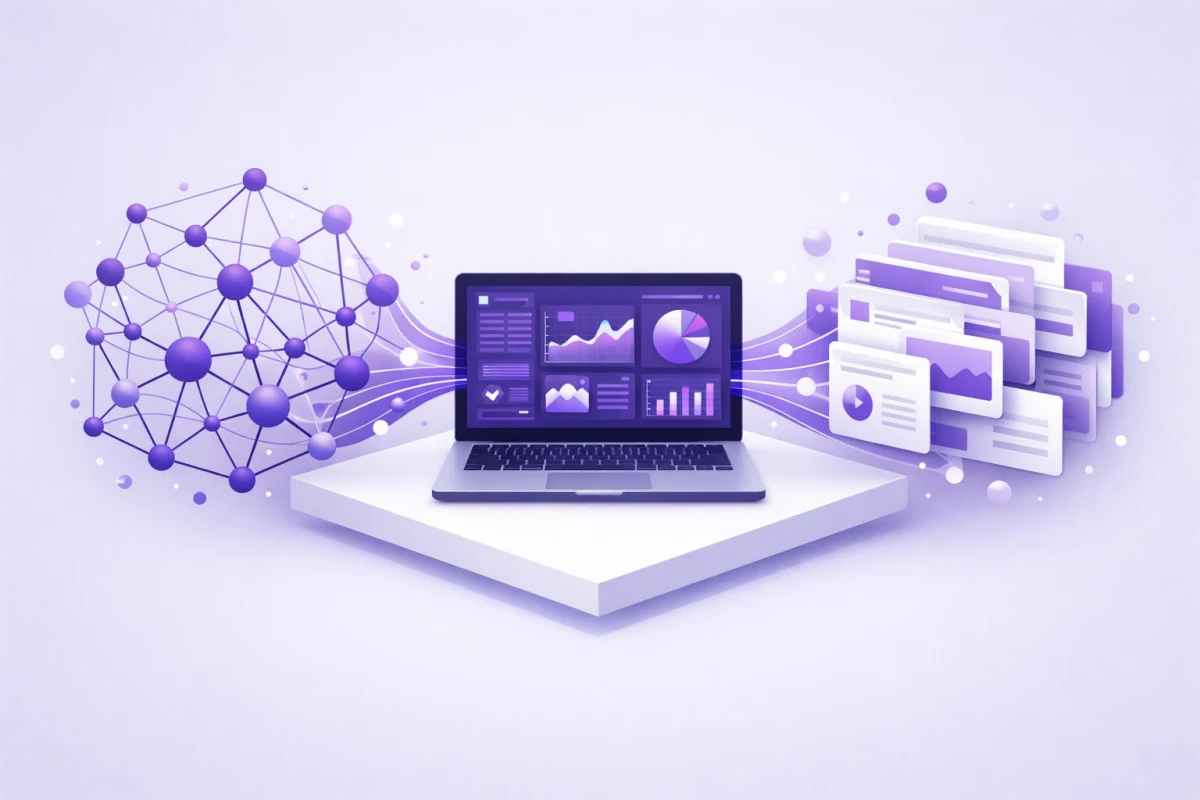
Standard RAG revolutionized how we connect large language models to external data. But it has a fundamental weakness: it treats information as disconnected chunks, missing the relationships that give answers real depth. GraphRAG solves this by bringing knowledge graphs into the retrieval process.
Instead of just finding semantically similar text, GraphRAG understands how entities connect to each other. It can answer questions that require connecting multiple facts spread across different documents. And it shows its reasoning, making AI responses traceable and verifiable.
This guide explains how graph-based RAG works, why it matters, and when you should consider it over traditional approaches.
What Is GraphRAG?
GraphRAG combines knowledge graphs with retrieval augmented generation. Microsoft Research introduced the approach in 2024 to address situations where standard RAG retrieval explained performs poorly.
The core difference lies in data representation. Traditional RAG stores documents as vector embeddings in a database and retrieves chunks based on semantic similarity. GraphRAG builds a structured knowledge graph where entities become nodes and their relationships become edges.
When you ask a question, GraphRAG doesn't just find relevant text. It identifies the entities in your query, locates them in the knowledge graph, then traverses connected relationships to gather comprehensive context. The LLM receives structured information about how concepts relate, not just similar-sounding paragraphs.
For example, ask a standard RAG system "What themes connect the main characters?" and it might struggle. There's nothing in that query to direct it toward the right chunks. GraphRAG handles this because it understands the dataset's structure. It knows which characters exist, how they're connected, and what events link them together.
How Does GraphRAG Work?
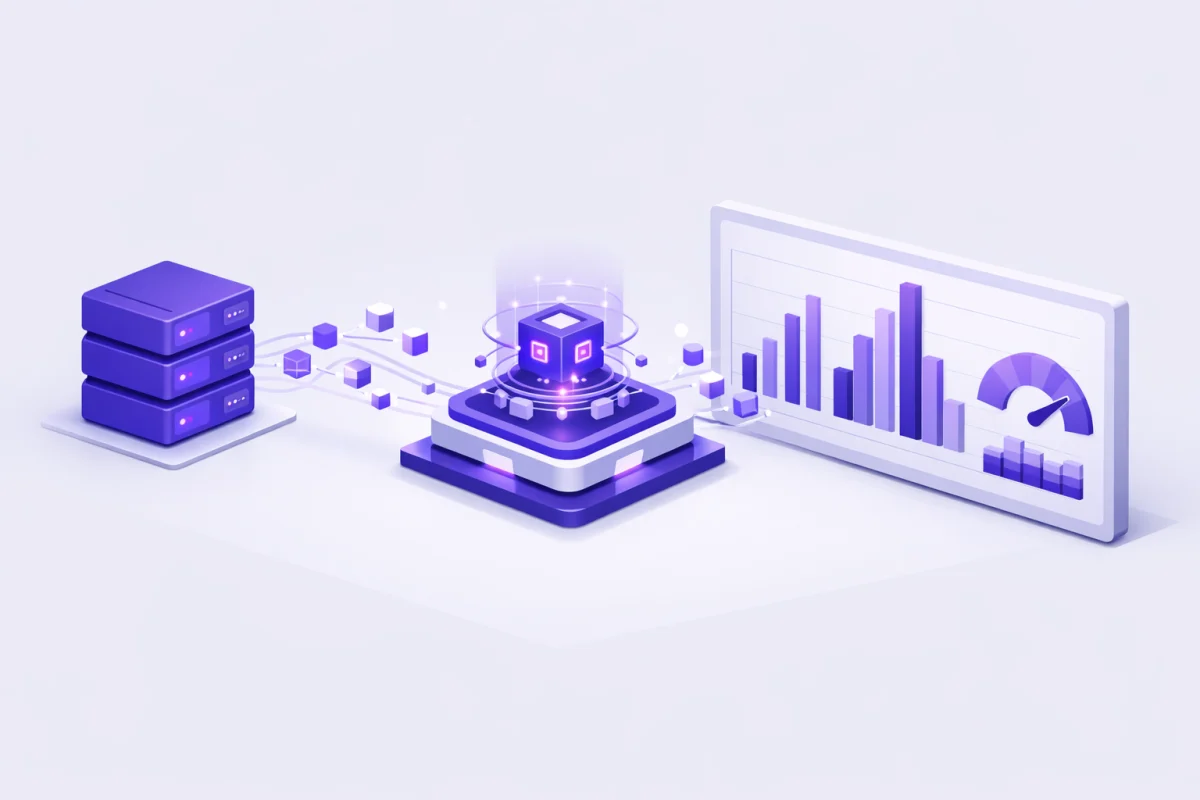
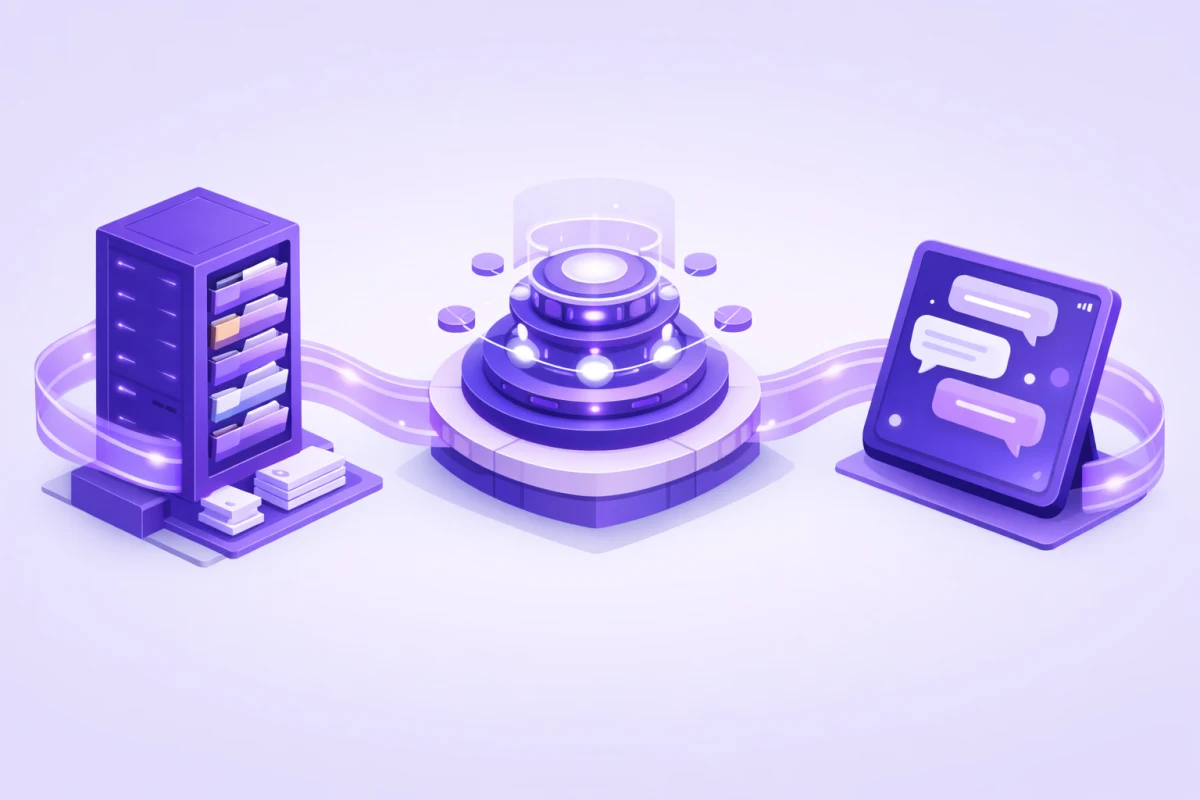
The GraphRAG pipeline has two phases: indexing and retrieval.
Indexing Phase
During indexing, source documents flow through several processing steps:
Text Chunking. Documents split into analyzable units called TextUnits. Microsoft's research found smaller chunks (around 600 tokens) extract more entities than larger ones, though they risk losing context for coreferences.
Entity and Relationship Extraction. An LLM processes each chunk to identify entities (people, organizations, concepts, locations) and the relationships between them. This produces structured triples like "Einstein—developed—Theory of Relativity" where entities become nodes and the relationship becomes an edge.
Knowledge Graph Construction. Extracted entities and relationships populate a graph database. Information about the same entity from different chunks merges into single nodes, connecting previously isolated facts.
Community Detection. Graph algorithms like Leiden clustering group related entities into communities. A community might contain all characters involved in a particular storyline, or all companies in a specific market sector.
Community Summarization. The LLM generates natural language summaries for each community. These summaries capture the overall themes and relationships within each cluster, enabling the system to answer broad questions about the dataset.
The result is a knowledge graph enriched with community summaries and embeddings for entity relationships, ready for retrieval.
Retrieval Phase
When a query arrives, GraphRAG offers two retrieval modes:
Local Search. The system identifies entities in your question, finds them in the graph using vector similarity on entity descriptions, then traverses outward to collect related entities, relationships, text chunks, and community summaries. This works well for questions about specific entities.
Global Search. For questions requiring dataset-wide understanding ("What are the main themes?"), the system iterates through community summaries at various levels of the hierarchy. Each summary contributes partial answers that get combined into a comprehensive response.
Both approaches provide the LLM with structured context showing exactly how retrieved information connects. This enables more accurate answers with clear provenance.
GraphRAG vs Standard RAG: Key Differences
Understanding where knowledge graph RAG diverges from traditional approaches helps you choose the right architecture.
Data Structure
Standard RAG stores documents as text chunks with vector embeddings. Each chunk exists independently, with no explicit connection to other chunks beyond embedding similarity.
Graph-based RAG models entities as nodes and relationships as edges in a graph database. This captures the actual structure of information, not just semantic patterns in text.
Retrieval Method
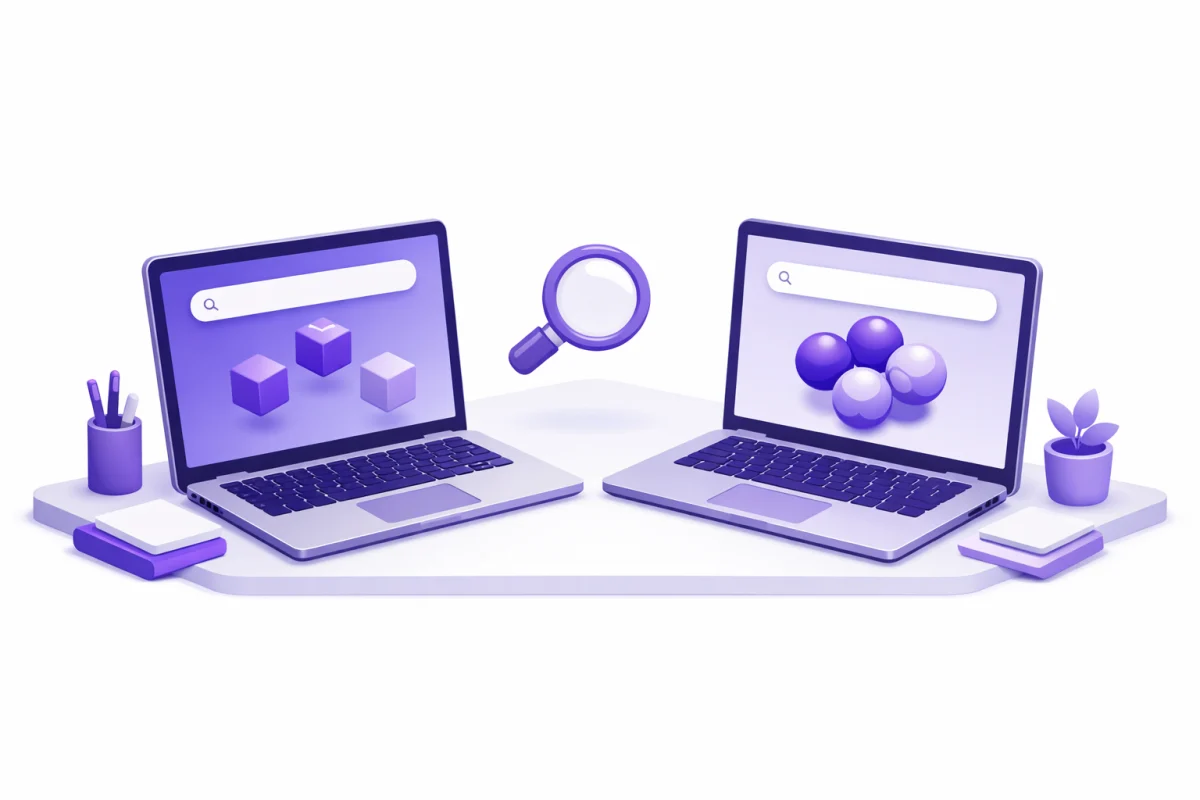
Vector-based RAG retrieves the top-k chunks most similar to your query embedding. It's fast and works well when the answer exists in a single passage.
GraphRAG retrieves a subgraph containing relevant entities, their relationships, connected text chunks, and community summaries. It can follow multi-hop paths through the knowledge graph to assemble context spanning multiple documents.
Reasoning Capability
Standard RAG struggles with questions requiring information synthesis. If answering requires connecting facts from different chunks, the system might miss crucial links.
Entity relationships RAG excels at multi-hop reasoning. It can trace connections like "Company A hired Person B who previously worked at Company C which was acquired by Company D." These chains emerge naturally from graph traversal.
Explainability
Vector similarity provides weak explainability. You know which chunks seemed relevant, but not why they connect to each other.
GraphRAG offers traceable reasoning paths. You can see exactly which entities were identified, which relationships were traversed, and which community summaries contributed to the answer.
Cost and Complexity
Standard RAG is simpler to implement and cheaper to run. Chunking, embedding, and vector search are well-understood operations.
GraphRAG requires more upfront investment. Building quality knowledge graphs demands careful entity extraction, relationship identification, and schema design. Graph databases need maintenance. But for complex domains, this investment pays off in answer quality.
When Should You Use GraphRAG?
GraphRAG isn't always the right choice. It shines in specific scenarios.
Complex Multi-Hop Questions
When queries require connecting multiple pieces of information through logical relationships, graph retrieval outperforms vector search. Research analysis, due diligence investigations, and complex troubleshooting benefit from graph-based approaches.
Entity-Rich Domains
Domains with many interconnected entities suit knowledge graphs naturally. Supply chains, organizational structures, scientific literature, legal precedents, and medical knowledge all have inherent graph structures.
Explainability Requirements
Regulated industries need to show their reasoning. Healthcare, finance, and legal applications benefit from GraphRAG's traceable answer provenance. You can demonstrate exactly which facts and relationships supported a conclusion.
Dataset-Wide Understanding
Questions like "What are the main themes?" or "How do these topics relate?" require understanding the entire corpus, not just finding similar chunks. GraphRAG's community summaries enable this global perspective.
When Standard RAG Is Better
For simple factual questions where answers exist in single passages, traditional RAG remains faster and cheaper. If your documents lack complex entity relationships, graph structure adds overhead without benefit.
Real-World GraphRAG Applications
Industries where accuracy and reasoning matter are adopting structured knowledge retrieval. Here's where GraphRAG makes the biggest impact.
Healthcare
Medical knowledge graphs link symptoms, diagnoses, treatments, drug interactions, and patient histories. When clinicians query a patient's condition, GraphRAG traverses relationships between presenting symptoms, possible conditions, contraindicated medications, and relevant research.
MedGraphRAG, a framework published in 2025, organizes medical data into hierarchical levels: private patient data, peer-reviewed literature, and foundational medical dictionaries. This structure enables accurate, traceable clinical decision support.
For AI for healthcare research, graph-based retrieval helps researchers discover connections between studies that vector search would miss.
Finance
Financial knowledge graphs map relationships between companies, executives, transactions, market events, and regulatory requirements. GraphRAG helps with:
Fraud Detection. Connecting patterns across transactions, accounts, and entities reveals suspicious activity that isolated analysis misses. Graph traversal can identify complex schemes involving multiple parties.
Investment Analysis. Mapping supply chain dependencies, board memberships, and market exposures provides deeper context than document retrieval alone.
Risk Assessment. Understanding how entities connect helps identify systemic risks and exposure across portfolios.
Benchmarks show graph-based approaches achieve accuracy scores up to 86% on complex financial queries, compared to 59-72% for vector-only methods.
Legal Research
Law firms manage vast repositories of case law, statutes, regulations, and contracts. GraphRAG helps lawyers:
- Find relevant precedents by traversing relationships between legal concepts
- Understand how new legislation affects existing interpretations
- Identify patterns across cases involving similar parties or issues
The structured retrieval surfaces connections that keyword search misses.
Scientific Discovery
Researchers use GraphRAG to map connections between studies across disciplines. Climate scientists linked previously disconnected research on renewable energy, revealing synergies that accelerated breakthroughs in sustainable technologies.
AI research assistant solutions increasingly incorporate graph-based retrieval to help researchers synthesize findings across large literature bases.
Building a GraphRAG System
Implementing GraphRAG requires several components working together. Here's what you need.
Knowledge Graph Database
You need a graph database to store entities and relationships. Popular options include:
Neo4j. The most widely used graph database, with extensive GenAI integrations. Neo4j provides Cypher query language for graph traversal and supports both cloud and self-hosted deployments.
Amazon Neptune. AWS's managed graph database service, supporting both property graph and RDF models.
FalkorDB. An open-source graph database optimized for GraphRAG workloads, emphasizing speed and scalability.
Orchestration Framework
Frameworks like LangChain and LlamaIndex provide the plumbing to connect LLMs with knowledge graphs. They offer:
- Document loaders and text splitters
- Integration with various LLMs for entity extraction
- Graph store connectors for Neo4j and other databases
- Retrieval chain abstractions combining vector and graph search
- Query generation from natural language to Cypher
These frameworks significantly reduce implementation time compared to building from scratch.
Entity Extraction Pipeline
Building quality knowledge graphs requires reliable entity and relationship extraction. Options include:
LLM-based extraction. Use models like GPT-4o or Claude to identify entities and relationships from text. This produces high-quality results but costs more at scale.
NLP library extraction. Tools like spaCy perform named entity recognition faster and cheaper than LLMs, though with less nuance for complex relationships.
Hybrid approaches. Use NLP libraries for initial extraction, then refine with LLMs for complex relationship identification.
Microsoft's GraphRAG library provides a complete pipeline for extraction, graph construction, community detection, and retrieval.
Building Custom Knowledge Repositories
For enterprise deployments, you'll likely combine GraphRAG with other data sources. Building custom knowledge repositories that integrate structured graph data with existing vector stores creates powerful hybrid retrieval systems.
GraphRAG Architecture Patterns
Several architectural approaches have emerged for implementing graph-based RAG. Understanding these patterns helps you choose the right design.
Microsoft's Local-to-Global GraphRAG
The original Microsoft approach uses hierarchical community structures. Local search finds specific entities and their neighborhoods. Global search aggregates across community summaries for broad questions.
This pattern works well for narrative documents where understanding overall themes matters as much as finding specific facts.
Knowledge Graph Enhanced RAG
This pattern starts with standard vector search to find relevant text chunks, then enriches results by retrieving connected entities and relationships from a knowledge graph. It adds graph context without fully replacing vector retrieval.
Organizations often adopt this hybrid approach when migrating from existing RAG systems.
Text2Cypher
Instead of predefined graph traversals, this approach uses an LLM to generate Cypher queries directly from natural language questions. The queries execute against the knowledge graph, and results feed back to the LLM for response generation.
This pattern offers maximum flexibility but requires careful prompt engineering to generate valid queries.
Agent-Based GraphRAG
AI agents with retrieval capabilities can dynamically choose between vector search, graph traversal, or both based on query characteristics. The agent decides which retrieval strategy best serves each question.
Understanding how AI agents reason and plan helps design effective routing logic between retrieval methods.
For complex workflows involving multiple data sources and retrieval strategies, multi-agent system architectures coordinate specialized agents for different aspects of the retrieval and generation process.
GraphRAG Challenges and Limitations
GraphRAG isn't a universal solution. Understanding its limitations helps you make informed architecture decisions.
Graph Construction Costs
Building quality knowledge graphs requires significant compute. LLM-based entity extraction processes every text chunk, accumulating substantial token costs at scale. Enterprise datasets can require days or weeks of processing.
Recent research explores dependency-based extraction using traditional NLP libraries instead of LLMs, reducing costs dramatically while maintaining reasonable quality.
Schema Design Complexity
Effective knowledge graphs need thoughtful schema design. What entity types should exist? Which relationships matter? How detailed should properties be?
Poor schema decisions cascade through the system, affecting retrieval quality. Unlike vector stores that accept arbitrary text, knowledge graphs require upfront planning.
Maintenance Overhead
Knowledge graphs need ongoing maintenance. As source documents change, graphs require updates. Entity resolution (determining when two mentions refer to the same entity) remains challenging. Duplicate nodes and stale relationships degrade quality over time.
Latency Concerns
Multi-hop graph traversals take longer than simple vector lookups. Complex queries requiring deep traversals or community aggregation can introduce noticeable latency. For real-time applications, careful optimization is essential.
Incomplete Extraction
LLMs don't extract every entity and relationship. Research shows roughly 65% of answer entities appear in constructed knowledge graphs. Missing entities mean missing connections, limiting the system's reasoning capability.
Getting Started with GraphRAG
Ready to experiment with graph-based RAG? Here's a practical starting path.
Step 1: Evaluate Your Use Case
Does your domain have complex entity relationships? Do users ask multi-hop questions? Is explainability important? If yes, GraphRAG likely adds value. If your queries are simple factual lookups, stick with foundational RAG concepts and architecture.
Step 2: Choose Your Stack
For rapid prototyping:
- Neo4j for graph storage (free Aura tier available)
- LangChain or LlamaIndex for orchestration
- OpenAI or Anthropic APIs for LLM-based extraction and generation
Microsoft's GraphRAG library provides a complete implementation if you want to follow their specific approach.
Step 3: Start Small
Begin with a focused document set, maybe 50-100 documents from a specific domain. Run entity extraction, build a knowledge graph, implement basic retrieval, and test with representative queries.
This lets you evaluate quality and iterate before scaling to larger datasets.
Step 4: Measure and Compare
Test the same queries against both vector-only RAG and GraphRAG. Compare answer quality, particularly for multi-hop reasoning questions. Measure latency and cost. This data drives informed decisions about production architecture.
Step 5: Consider Hybrid Approaches
Most production systems benefit from combining vector and graph retrieval. Use vector search for simple queries and graph traversal for complex reasoning. Route queries based on detected characteristics.
Looking for AI tools to help with your RAG implementation? Browse our AI tools directory to discover solutions that fit your development workflow.
The Future of GraphRAG
Graph-based retrieval is evolving rapidly. Here's where the field is heading.
Reduced Construction Costs
New frameworks eliminate LLM dependency during graph construction, using traditional NLP for entity extraction. This dramatically reduces costs while maintaining quality for many use cases.
Real-Time Graph Updates
Current systems require batch reprocessing when documents change. Research focuses on incremental graph updates that incorporate new information without full rebuilds.
Improved Multi-Hop Reasoning
Frameworks like StepChain GraphRAG combine stepwise reasoning with graph traversal, achieving state-of-the-art results on multi-hop question answering benchmarks.
Tighter Agent Integration
As AI agents become more sophisticated, GraphRAG provides the structured knowledge backbone for complex reasoning workflows. Agents will increasingly route queries through knowledge graphs when relationship understanding matters.
Domain-Specific Optimizations
Healthcare, legal, and financial applications are driving specialized GraphRAG variants optimized for their unique entity types, relationship patterns, and compliance requirements.
Conclusion
GraphRAG represents a fundamental shift in how AI systems handle complex information retrieval. By combining knowledge graphs with large language models, it enables multi-hop reasoning, explainable answers, and deeper understanding of entity relationships that standard RAG cannot match.
The technology isn't right for every application. Simple Q&A over straightforward documents works fine with vector retrieval. But for domains with complex relationships, regulatory requirements for explainability, or questions requiring cross-document reasoning, graph-based approaches deliver measurably better results.
Start with a focused pilot, measure against your specific requirements, and expand based on demonstrated value. The investment in knowledge graph construction pays dividends in answer quality and user trust.