Foundation models and frontier models are two terms you'll hear constantly when reading about AI. They sound similar, get used interchangeably sometimes, and can create real confusion about what we're actually talking about.
Here's the straightforward answer: foundation models are large, versatile AI systems trained on broad datasets that serve as the building blocks for many applications. Frontier models are the subset of foundation models that represent the absolute cutting edge of capability. Think of it this way: every frontier model is a foundation model, but most foundation models aren't at the frontier.
This distinction has become increasingly important as AI capabilities have advanced rapidly through 2025 and into 2026. Regulators, researchers, and AI companies all use these terms differently depending on context. Understanding what each means will help you navigate conversations about AI safety, choose the right tools for your work, and make sense of AI policy debates.
What Are Foundation Models?
Stanford's Center for Research on Foundation Models coined the term in August 2021. They defined foundation models as AI models trained on broad data using self-supervision at scale that can be adapted to a wide range of downstream tasks.
The key characteristics that make a model "foundational" include:
Large-scale training. Foundation models learn from enormous datasets covering text, images, code, audio, or combinations of these. GPT-5 trained on trillions of tokens. Gemini 3 processed text, images, video, and audio together. This breadth gives them general knowledge rather than narrow expertise.
Adaptability. A single foundation model can power dozens of different applications. The same underlying model might answer questions, write code, analyze images, and translate languages. Developers can fine-tune foundation models for specific use cases without retraining from scratch.
Transfer learning. Skills learned during initial training transfer to new tasks. A model that learned to reason about physics while processing scientific papers can apply that reasoning to new physics problems it's never seen.
Emergent capabilities. As these models scale, they develop abilities that weren't explicitly trained. A model trained to predict the next word in text might spontaneously learn to do arithmetic, write poetry, or solve logic puzzles.
Foundation models act as a base layer in AI. Companies build products on top of them. Researchers use them as starting points for specialized systems. The term "foundational" captures their role as the underlying infrastructure for modern AI applications.
What Are Frontier Models?
Frontier models represent the leading edge of AI capability at any given moment. The term gained prominence in July 2023 when Anthropic, Google, Microsoft, and OpenAI formed the Frontier Model Forum to address safety challenges with the most powerful AI systems.
The Forum defines frontier models as large-scale machine learning models that exceed the capabilities currently present in the most advanced existing models and can perform a wide variety of tasks.
What makes a model "frontier" rather than just "foundational"? Several factors:
State-of-the-art performance. Frontier models top the benchmarks. They set new records on reasoning tests, coding challenges, and multimodal tasks. When you're comparing models on leaderboards, the frontier models sit at the top.
Potential for dual-use concerns. Regulators specifically flag frontier models because their advanced capabilities could enable harmful applications. The EU AI Act identifies models trained with more than 10^25 floating point operations as presumptively having systemic risk.
Cutting-edge timing. A model is only "frontier" relative to what else exists. GPT-4 was a frontier model in 2023. By late 2025, with GPT-5, Gemini 3, Claude Opus 4.5, and Grok 4 all released, GPT-4 is still a capable foundation model but no longer at the frontier.
Unpredictable emergence. Frontier models often display capabilities their creators didn't anticipate. New abilities appear during training or after deployment as users discover novel applications.
The frontier ai meaning fundamentally involves being at the boundary of known capability. These models can do things no previous AI could do, which makes them both exciting and challenging to regulate.
Key Differences Between Foundation and Frontier Models
Understanding the relationship between these terms requires recognizing that they describe overlapping but distinct categories.
Scope vs. capability. Foundation model is a structural term describing how a model is built and used. Frontier model is a capability term describing where a model sits relative to others. A foundation model can be average, good, or cutting-edge. A frontier model is specifically the cutting-edge subset.
Permanence vs. temporality. Once a model qualifies as foundational, that description remains accurate. The foundational nature doesn't change. But frontier status is temporary. Today's frontier model becomes tomorrow's baseline as newer models surpass it.
Breadth vs. intensity. The foundation model concept emphasizes versatility and adaptability across tasks. The frontier model concept emphasizes maximum capability and performance at the limits of what's possible.
Usage vs. regulation. Foundation model terminology appears in technical discussions about architecture and training. Frontier model terminology dominates policy conversations about safety, risk, and governance.
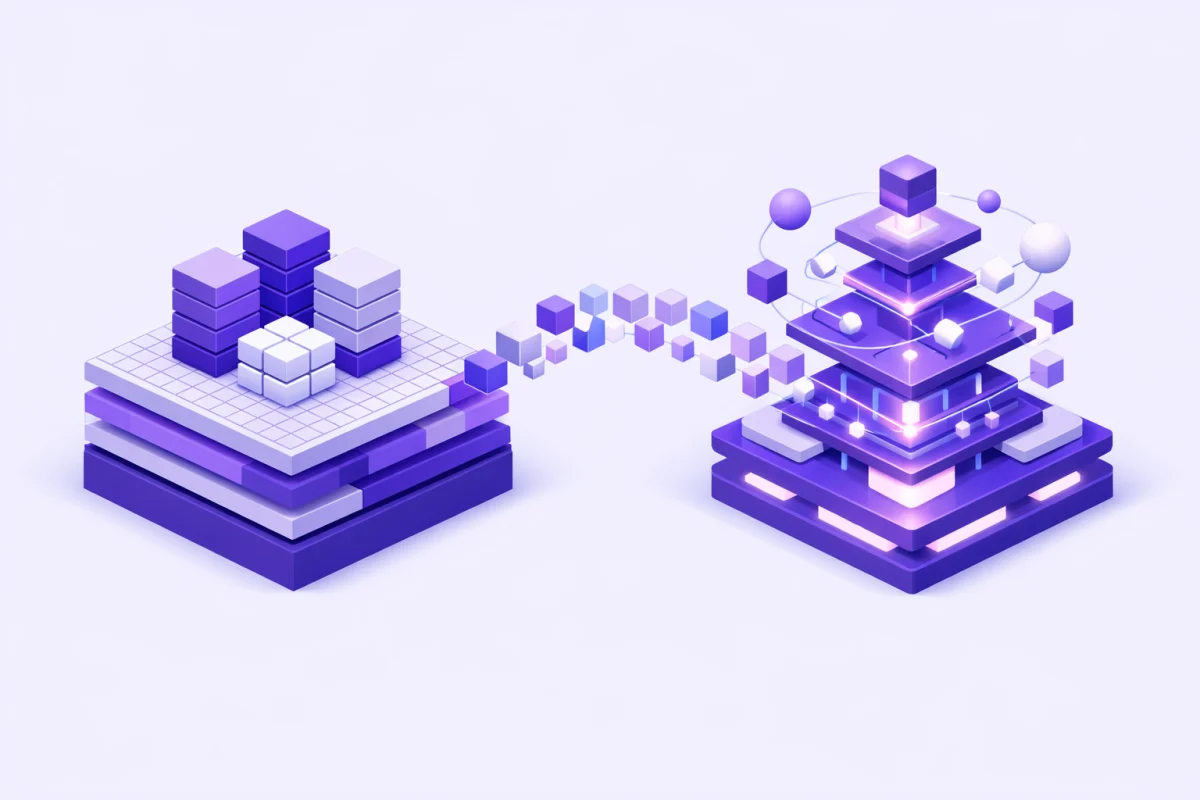
Here's a simple framework: base models AI systems start as raw pretrained models. Through training with human feedback and other post-training processes, they become instruction-following foundation models. The most capable of these foundation models are the frontier models that companies like Anthropic, OpenAI, and Google release as their flagship products.
Current Foundation Model Examples
The AI model provider landscape includes numerous foundation models at various capability levels.
GPT-5 (OpenAI) powers ChatGPT and launched in August 2025. It's a multimodal foundation model handling text, images, code, and audio. OpenAI offers it through both consumer products and API access.
Claude Opus 4.5 and Sonnet 4.5 (Anthropic) released in late 2025. Claude Sonnet 4.5 achieved 77.2% on SWE-bench Verified, the highest score for real-world software engineering tasks. Anthropic emphasizes safety research alongside capability development.
Gemini 3 (Google) hit an unprecedented 1501 Elo score on LMArena, breaking the 1500 barrier for the first time. Its Deep Think mode enables multi-step reasoning that previous models couldn't match.
Llama 4 (Meta) continues Meta's open weights versus open source approach. The Maverick and Scout variants offer up to 10 million token context windows, available for developers to download and modify.
Mistral Large (Mistral AI) represents European foundation model development. Mistral has built a reputation for efficient models that punch above their weight class.
These foundation model examples span different philosophies: proprietary vs. open, safety-focused vs. capability-focused, multimodal vs. text-specialized. All qualify as foundation models because they're trained on broad data and adaptable to many tasks.
Current SOTA Models at the Frontier
As of early 2026, several models compete for frontier status across different dimensions. Understanding model benchmarks explained helps clarify what "best" means in different contexts.
For overall reasoning: Gemini 3 Pro leads with 91.9% on GPQA Diamond, exceeding human expert performance. Its 41% score on Humanity's Last Exam sets a new record for the hardest AI benchmark.
For coding: Claude Sonnet 4.5 dominates real-world software engineering with 77.2% on SWE-bench Verified. Claude Opus 4.5 scored 80.9%, the highest yet recorded.
For mathematical reasoning: DeepSeek-V3.2 achieved gold medals at IMO 2025 and IOI 2025, demonstrating that sota models aren't exclusively from US-based labs.
For multimodal understanding: Gemini 3 processes native audio and video alongside text, enabling capabilities like video-to-code generation that other models can't match.
For agentic tasks: Reasoning models like o1 and Claude's computer use capabilities enable AI to take actions in software environments, not just generate text.
The frontier keeps moving. November 2025 saw GPT-5.1, Grok 4.1, Gemini 3 Pro, and Claude Opus 4.5 all release within six days of each other. By the time you read this, newer models may have pushed the frontier further.
Why This Distinction Matters
The foundation vs. frontier distinction isn't just academic terminology. It has practical implications for users, developers, and policymakers.
For choosing AI tools: Not every task needs frontier capability. A foundation model that's a generation behind may cost less, run faster, and work perfectly well for your use case. AI research assistant tools range from frontier models to specialized fine-tuned systems.
For understanding costs: Frontier models typically cost 2 to 10 times more than previous-generation foundation models. GPT-5 commands premium pricing. Gemini 3 Pro costs more than Gemini 2.5 Flash. Knowing where the frontier lies helps with budget planning.
For safety evaluation: The Frontier Model Forum specifically targets the most capable models because they pose the greatest potential for misuse. Foundation models below the frontier still require safety work, but the intensity of scrutiny differs.
For regulatory compliance: The EU AI Act creates specific obligations for "general-purpose AI models with systemic risk," essentially their term for frontier models. Models trained above 10^25 FLOPS face additional requirements around risk assessment, incident reporting, and cybersecurity.
For research priorities: Academic researchers often can't access frontier models or afford their compute costs. Understanding which foundation models provide sufficient capability for a research question matters for practical science.
Ready to explore AI tools that match your specific needs? Browse AI tools on Stackviv to find options across the capability spectrum.
Regulatory Frameworks and Frontier AI
Governments have started creating specific rules for frontier models. This regulatory attention explains why the terminology matters beyond technical discussions.
The EU AI Act defines "general-purpose AI models with systemic risk" using a compute threshold of 10^25 FLOPS. Providers of such models must conduct adversarial testing, assess and mitigate risks, report serious incidents, and maintain cybersecurity protections. As of August 2025, these obligations are in effect.
The Frontier Model Forum brings together major AI labs to develop shared safety practices. Members commit to pre-deployment risk assessments, external red-teaming, and information sharing about emerging threats. The Forum's AI Safety Fund supports independent research on evaluation methods.
US Executive Order 14110 established reporting requirements for "dual-use foundation models" with similar compute thresholds. Companies training models above these thresholds must notify the government and share safety test results.
These frameworks treat frontier models differently precisely because their capabilities pose unique challenges. A model that can write convincing text at scale, generate realistic images, or reason about complex systems requires different governance than a narrower AI tool.
For a deeper understanding of the technical details, our complete guide to LLMs covers the architecture and training methods that produce these models.
How Foundation Models Become Frontier Models
The journey from foundation model to frontier status involves several stages:
Pre-training establishes the base knowledge. Models learn language patterns, factual knowledge, reasoning strategies, and multimodal understanding from massive datasets. This produces what some call "base models ai," meaning the raw pretrained weights before any post-training.
Post-training refinement makes models useful and safe. Through supervised fine-tuning, RLHF, and other techniques, developers shape how models respond to instructions and handle edge cases.
Scaling pushes capabilities forward. More parameters, more training data, more compute time, and architectural improvements combine to create models that outperform predecessors.
Evaluation determines frontier status. Models undergo extensive benchmarking against standardized tests and real-world tasks. Performance relative to existing models determines whether something qualifies as frontier.
Deployment exposes models to broader use. Sometimes capabilities only become apparent when millions of users explore what a model can do.
The distinction between foundation and frontier isn't binary. Models exist on a continuum. Last year's frontier becomes this year's baseline, and today's baseline remains a useful foundation model for many applications.
The Bottom Line
Foundation models are the broad category of large, versatile AI systems that can be adapted to many tasks. Frontier models are the most advanced members of that category at any given time.
Think of foundation models as the general class of buildings called skyscrapers. Frontier models are specifically the tallest skyscrapers in the world right now. A building can remain a skyscraper forever, but it only holds the "world's tallest" title until something taller gets built.
This distinction shapes how researchers study AI capability, how regulators approach governance, how companies market their products, and how users choose their tools. As AI continues advancing rapidly, both terms will remain central to understanding where the technology stands and where it's heading.